A power cut at a data centre does not necessarily begin by taking an application offline. Backup systems can keep servers running. If cooling falls away, some processing may have to stop. The service that relies on it then experiences a failure that started in another sector.
In May 2026, the ITU, UNDRR and Sciences Po presented a report on risks to digital systems in space, on land and at sea. Its cases draw on real events and published research. Their sequences are illustrative scenarios, without a predicted date or assigned probability for any particular disaster.
A common cause and a chain of failures
A common cause can affect several systems at once. A cascading failure starts in one part and deprives another of something it needs. The two mechanisms can coexist. Data centres in different places can share a supplier, a telecommunications route or a source of power.
In the report’s extreme-heat scenario, energy demand and cooling become problems at the same time. The hypothetical impact reaches hosted services, including hospital coordination and payments. It raises a question for people who use them: what critical work can still continue if the shared infrastructure stops responding?
What happened in an actual storm
During the geomagnetic storm of May 2024, some GPS-guided tractors in the US Midwest veered off course or stopped, according to NASA. The same event disrupted high-frequency radio communications and affected navigation systems. Some flights near the pole were rerouted as a precaution.
The record identifies distinct effects and limits what we can conclude. It does not show a general collapse of the electricity grid or of all digital services. It shows why an organisation should know which of its services rely on the same positioning or timing system.
When a backup link shares the same path
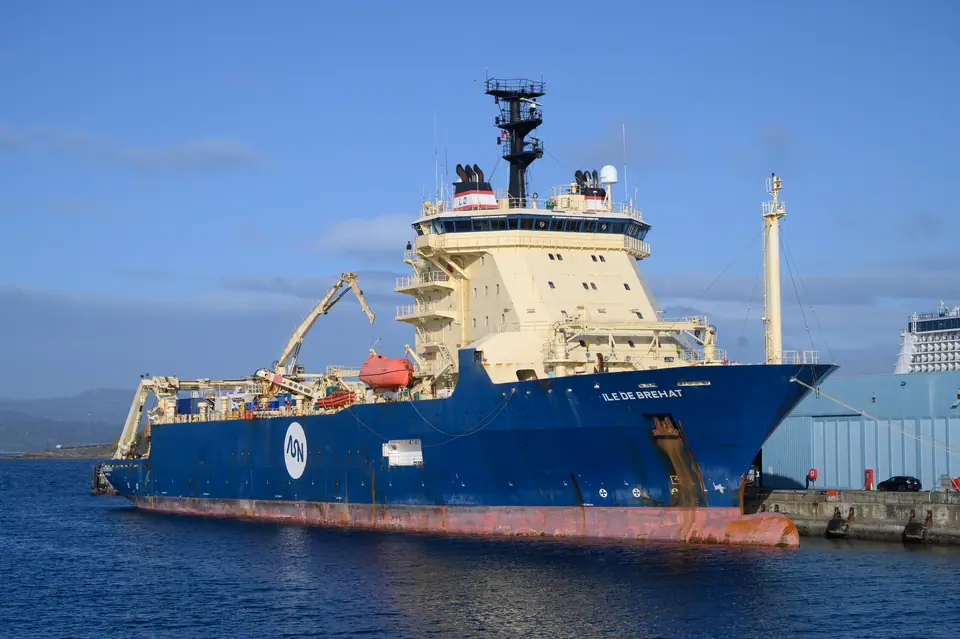
At sea, backup capacity helps when it can reach the destination by genuinely separate routes. A cable, a landing station and the power supply on shore are all part of the same service path. A repair requires teams, ships, permits and suitable working conditions. Each of those resources takes its own time to mobilise.
Separating equipment in a diagram does not make it independent. A useful exercise asks what the backup path depends on and what can still interrupt it. It also matters who can authorise the switch and whether teams can coordinate while the failure is under way.
Sources in this section 1
What to measure before the service is needed
A dependency inventory can start with three practical services: sending an alert, confirming that a request was received and preserving a record until recovery. For each one, identify the route, the minimum task that can still be carried out and how to measure the time until it returns. A test demonstrates only the conditions it included.
Horizon 2126 takes this reading as a starting point for research into resilient communications. A system explains its capabilities better when it distinguishes between normal service, degraded operation and the loss of a particular function. People need that information to decide what to do.
Sources and references
- ITU, UNDRR e Sciences Po · When digital systems fail, full report
- ITU · Report presentation, 5 May 2026
- NASA · What the May 2024 geomagnetic storm revealed
- NASA CCMC · Record of impacts from the May 2024 storm
Sources reviewed on .