Picture a team entering a building where its main network’s radio signal drops out. Voice still matters. A map, another team’s location or a photo could add information. Different kinds of data place different demands on the link.
This is the starting point for NIST’s public-safety research. Land mobile radio can work in direct mode, away from its usual infrastructure. Broadband carries a wider range of data. Researchers want to know where direct 5G can bring some of these capabilities together.
A direct link and the services that organise it
Sidelink is a radio interface for exchanging data directly between compatible devices. Proximity Services, or ProSe, support functions such as discovery and authorisation. In certain modes devices select radio resources without a base station deciding on each transmission. Conventional mobile connections use the network as an intermediary.
A 5G badge gives little information about these functions. Availability depends on devices, software and configuration. NIST describes technology still being developed for public safety. Access to the interface and interoperability have to be checked for each combination of equipment.
What an extra hop buys
Samantha Gamboa Quintiliani, Thomas Henderson, Wesley Garey, Chunmei Liu and Richard Rouil adapted a simulator to represent group voice using Mission Critical Push-to-Talk. A later study compared routes relayed by the devices over multiple hops.
Good intermediate contacts can extend a path. Each hop consumes radio resources others also need. The researchers studied interference along the route and the limits of devices that cannot transmit and receive simultaneously. A relay can improve coverage while degrading other aspects. The outcome depends on the scenario.
2.5 kilometres is a trial question
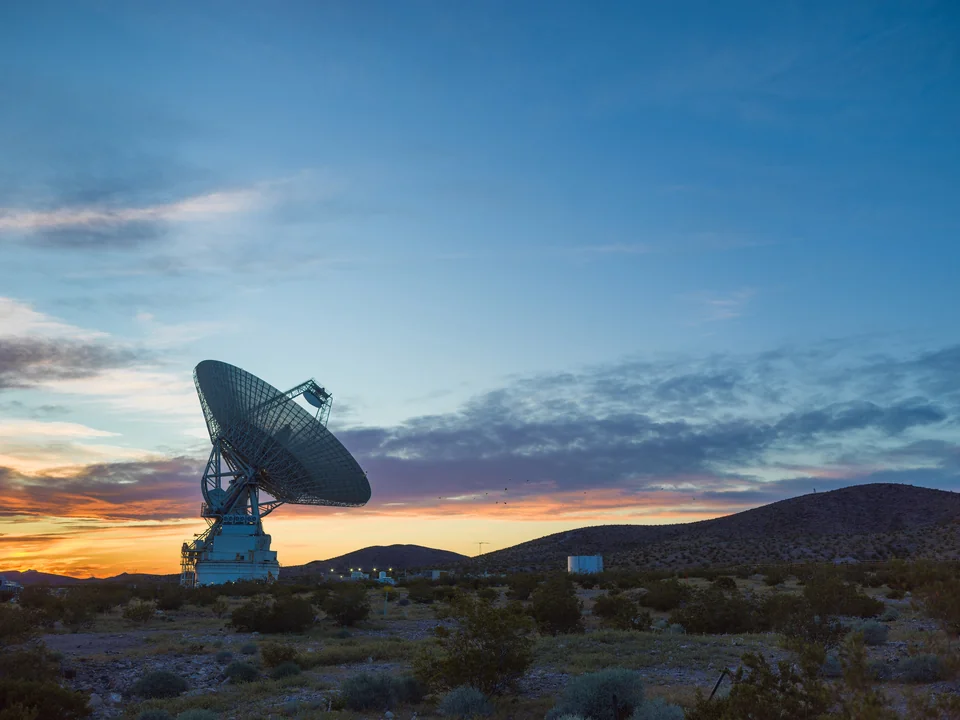
NIST plans to measure direct links up to 2.5 kilometres at Table Mountain and study the effect of walls and materials. This is the planned limit of field measurements. Those measurements will test the predictions on equipment. Distances reported in simulations depend on the conditions used.
Satellite links could complement a local network with suitable equipment and service. NIST proposes studying how the two fit together, for example when a group communicates locally without a clear view of the sky. The field question is which information gets through, with what delay, at what distance and under which conditions.
| Evidence | What is documented |
|---|---|
| Technical specification | ProSe defines proximity services in 5G. |
| Simulation results | Relays can extend range and use shared radio resources. Interference and transmit/receive limits apply. |
| Planned field trials | Measurements up to 2.5 km at Table Mountain and work on indoor obstacles. |
| Possible future integration | Local networking with non-terrestrial links, dependent on hardware and service. |
Sources and references
- NIST · Direct links for public safety and planned trials
- Gamboa Quintiliani, Henderson, Garey, Liu e Rouil · System-level simulation of public-safety applications, 2024
- Gamboa Quintiliani, Henderson, Garey, Liu e Rouil · Simulation of multi-hop device relays
- 3GPP · TS 23.304, Proximity Services in the 5G system
Sources reviewed on .